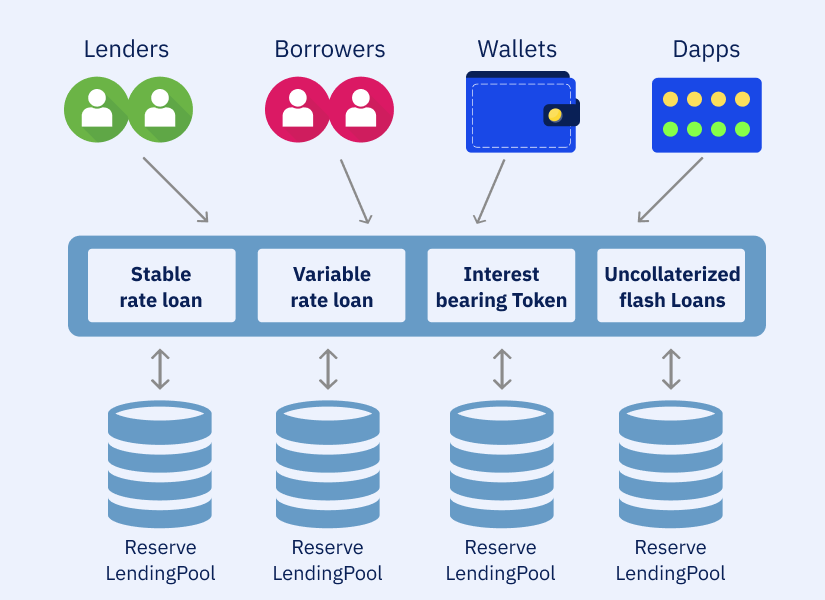
Aave is the Leading Decentralized Lending Protocol Revolutionizing DeFi

Aave represents one of the most significant innovations in the decentralized finance ecosystem, fundamentally changing how users interact with lending and borrowing services without traditional financial intermediaries. Since its inception, Aave has grown to become a cornerstone of the DeFi landscape, offering unprecedented access to financial services through blockchain technology. The protocol has demonstrated remarkable growth and adoption, making it essential for anyone interested in cryptocurrency to understand what Aave offers and how it operates within the broader digital asset ecosystem.

Understanding the Fundamentals of Aave

Aave is a decentralized non-custodial money market protocol that enables users to participate either as depositors or borrowers. This fundamental structure allows the platform to create a dynamic ecosystem where liquidity providers can earn passive income while borrowers gain access to capital without going through traditional banking channels. The beauty of Aave lies in its permissionless nature, meaning anyone with an internet connection and a compatible wallet can access these financial services regardless of their location or background.

The protocol operates through a sophisticated system of smart contracts deployed on the Ethereum blockchain, ensuring that all transactions are executed automatically and transparently. These smart contracts eliminate the need for middlemen, reducing costs and increasing efficiency for all participants. Aave has expanded beyond Ethereum to support multiple blockchain networks, including Polygon, Avalanche, and Arbitrum, further increasing its accessibility and reducing transaction costs for users.

How Aave Differs from Traditional Finance

Traditional lending systems require extensive documentation, credit checks, and approval processes that can take days or even weeks. Aave eliminates these barriers by allowing users to deposit collateral and instantly access borrowing capacity. The protocol operates twenty-four hours a day, seven days a week, without holidays or banking hours limitations. This always-on availability represents a paradigm shift in how financial services can be delivered to users worldwide.

Unlike conventional banks that hold your deposits and lend them out at their discretion, Aave gives users complete control over their assets. When you deposit funds into Aave, you receive aTokens that represent your deposit and automatically accumulate interest. These tokens can be transferred, traded, or used in other DeFi protocols, providing unprecedented flexibility compared to traditional savings accounts where your money is essentially locked.

The Mechanics of Lending and Borrowing on Aave

Depositors who provide liquidity to Aave earn passive income through interest payments generated by borrowers. The interest rates on Aave are algorithmically determined based on supply and demand dynamics within each liquidity pool. When borrowing demand is high and liquidity is scarce, interest rates increase to incentivize more deposits. Conversely, when liquidity is abundant, rates decrease to encourage borrowing activity.

Borrowers on Aave can access funds through over-collateralized loans, meaning they must deposit assets worth more than what they wish to borrow. This mechanism protects the protocol and depositors from default risk while allowing borrowers to access liquidity without selling their crypto holdings. For many users, this represents an attractive option to access cash while maintaining exposure to potential price appreciation of their deposited assets.

Flash Loans: A Revolutionary Aave Innovation

One of the most groundbreaking features introduced by Aave is the flash loan mechanism. Flash loans allow users to borrow any amount of available liquidity without providing collateral, as long as the loan is repaid within the same blockchain transaction. This innovation has opened up entirely new possibilities for arbitrage, collateral swaps, and self-liquidation strategies that were previously impossible in traditional finance.

The flash loan feature on Aave has become incredibly popular among developers and sophisticated traders who use these instant loans to execute complex financial strategies. While the technical barrier to entry is higher for flash loans, they represent one of the most innovative aspects of what Aave brings to the DeFi ecosystem. The protocol has processed billions of dollars in flash loan volume since the feature was introduced.

Aave Governance and the AAVE Token

Aave operates as a decentralized autonomous organization where AAVE token holders have voting rights on protocol upgrades, parameter changes, and treasury allocations. This governance structure ensures that the community has a direct say in how Aave evolves over time. The transition to community governance represents the protocol's commitment to true decentralization and user empowerment.

The AAVE token serves multiple purposes within the ecosystem beyond governance. Token holders can stake their AAVE in the Safety Module, which acts as a backstop against potential shortfall events in the protocol. In return for taking on this risk, stakers receive rewards in the form of additional AAVE tokens. This mechanism aligns incentives between token holders and the overall health of the protocol.

Historical Performance and Market Position

Aave has demonstrated remarkable growth since its early days, with some periods showing gains exceeding six thousand percent. Such performance highlights the explosive potential within the DeFi sector and the market's recognition of Aave as a leading protocol. While past performance does not guarantee future results, Aave has consistently maintained its position among the top DeFi protocols by total value locked.

The protocol's journey from its original incarnation as ETHLend to the current Aave platform demonstrates the team's ability to adapt and innovate. This evolution has included multiple version upgrades, each introducing new features and improvements that have kept Aave at the forefront of DeFi innovation. The continuous development and community engagement have been crucial factors in maintaining Aave's competitive position.

Security and Risk Management on Aave

Security remains paramount for any DeFi protocol, and Aave has invested heavily in ensuring the safety of user funds. The protocol has undergone numerous audits by leading blockchain security firms, and the smart contracts have been battle-tested through years of operation handling billions of dollars in value. Aave also maintains a bug bounty program that incentivizes security researchers to identify and report vulnerabilities.

The Safety Module mentioned earlier represents another layer of protection for Aave users. In the event of a shortfall, staked AAVE tokens can be slashed to cover losses, providing depositors with an additional safety net. This mechanism has been carefully designed to balance the need for security with fair compensation for those who stake their tokens.

Risk Parameters and Liquidation Mechanics

Aave implements sophisticated risk parameters for each supported asset, including loan-to-value ratios, liquidation thresholds, and liquidation penalties. These parameters are carefully calibrated based on the volatility and liquidity characteristics of each asset. When a borrower's collateral value falls below the liquidation threshold, external liquidators can repay part of the debt and receive the collateral at a discount.

Understanding these risk parameters is essential for anyone using Aave for borrowing. The protocol provides real-time health factor indicators that help users monitor their positions and avoid liquidation. Prudent users maintain comfortable margins above liquidation thresholds to account for market volatility and ensure they have time to add collateral or repay debt if needed.

Aave Version 3 and Recent Innovations

The release of Aave V3 brought significant improvements to the protocol, including enhanced capital efficiency, cross-chain functionality, and improved risk management tools. Portal, one of the headline features of V3, enables seamless movement of liquidity across different blockchain networks where Aave is deployed. This cross-chain capability positions Aave to capture liquidity and users across the expanding multi-chain DeFi ecosystem.

Efficiency Mode in Aave V3 allows users to extract maximum borrowing power when supplying and borrowing correlated assets. For example, users supplying stablecoins can borrow other stablecoins at much higher loan-to-value ratios than would be possible with uncorrelated assets. This feature significantly improves capital efficiency for specific use cases while maintaining appropriate risk management.

Isolation Mode and New Asset Listings

Aave V3 introduced Isolation Mode, which allows the protocol to list new assets with limited exposure. Assets in Isolation Mode can only be used as collateral to borrow specific stablecoins up to a defined debt ceiling. This approach enables Aave to expand its supported asset list while managing the risks associated with newer or more volatile tokens.

The careful approach to new asset listings demonstrates Aave's commitment to balancing innovation with security. The governance process for adding new assets involves extensive community discussion and risk assessment, ensuring that the protocol's expansion does not come at the expense of existing users' safety.

The Broader DeFi Ecosystem and Aave's Role

Aave does not exist in isolation but rather as part of a vibrant and interconnected DeFi ecosystem. The protocol's aTokens are widely integrated with other DeFi applications, allowing users to earn Aave interest while simultaneously using their deposits in other protocols. This composability is often referred to as money legos and represents one of the most powerful aspects of DeFi.

Many DeFi strategies involve Aave as a core component, whether for leveraged yield farming, delta-neutral strategies, or simple interest earning. The protocol's reliability and deep liquidity make it a preferred choice for both individual users and institutional participants entering the DeFi space. Aave has also been at the forefront of institutional DeFi adoption through initiatives like Aave Arc, which provides permissioned pools for regulated entities.

Comparing Aave with Other Lending Protocols

While several lending protocols exist in the DeFi space, Aave has distinguished itself through continuous innovation and a strong focus on user experience. Features like flash loans, stable rate borrowing, and credit delegation were pioneered by Aave and have helped establish the protocol as an industry leader. The breadth of supported assets and deployment across multiple chains further strengthens Aave's competitive position.

The protocol's governance token distribution and community engagement have also contributed to building a loyal user base that actively participates in protocol development. This community-driven approach ensures that Aave continues to evolve in ways that serve user needs rather than purely profit-driven motivations.

Getting Started with Aave

For newcomers interested in using Aave, the process is relatively straightforward. Users need a compatible Web3 wallet like MetaMask and some cryptocurrency to deposit. The Aave interface is designed to be user-friendly, with clear displays of available markets, interest rates, and user positions. Educational resources are available to help users understand the risks and opportunities associated with DeFi lending.

Before depositing significant funds, new users should familiarize themselves with the protocol's mechanics, including how interest accrual works, what liquidation means, and how to monitor their positions. Starting with small amounts allows users to learn the system without risking substantial capital. The Aave community and documentation provide excellent resources for those looking to deepen their understanding.

Best Practices for Aave Users

Successful use of Aave requires attention to several key factors. Monitoring your health factor regularly is essential if you have active borrows. Understanding the interest rate dynamics helps optimize your strategy based on market conditions. Keeping informed about governance proposals ensures you can participate in shaping the protocol's future and stay aware of any upcoming changes that might affect your positions.

Security hygiene is equally important when interacting with Aave or any DeFi protocol. Using hardware wallets, verifying contract addresses, and being cautious of phishing attempts are fundamental practices that protect your assets. The permissionless nature of DeFi means users bear full responsibility for their security, making education and vigilance essential.

The Future of Aave and DeFi Lending

Aave continues to evolve with ambitious plans for the future, including further expansion to new blockchain networks and the development of additional features that enhance user experience and capital efficiency. The protocol's governance discussions reveal a community actively engaged in pushing the boundaries of what decentralized lending can achieve.

As the broader cryptocurrency market matures and regulatory frameworks develop, Aave is well-positioned to bridge the gap between traditional finance and DeFi. The protocol's track record of security, innovation, and community governance provides a strong foundation for continued growth and adoption. Whether you are a casual cryptocurrency enthusiast or a sophisticated trader, understanding Aave is essential for navigating the modern DeFi landscape.

The remarkable journey of Aave from a simple lending concept to a multi-billion dollar protocol demonstrates the transformative potential of decentralized finance. As more users discover the benefits of permissionless lending and borrowing, Aave will likely continue to play a central role in shaping the future of finance. The protocol's commitment to innovation, security, and community governance positions it as a leader in the ongoing financial revolution enabled by blockchain technology.

Search on Youtube!

Privacy Policy

Terms of Service

Refund Policy

Aave

Aave

Aave

Aave Aave Aave

Aave

Privacy Policy

Terms of Service

Refund Policy

Aave Aave Aave Aave

Aave

Notes FAQ Contact Us
Collection
Advanced
Search Tips
Peer reviewed Peer reviewed
Direct link Direct link
ERIC Number: EJ961036
Record Type: Journal
Publication Date: 2012-Mar
Pages: 10
Abstractor: As Provided
ISBN: N/A
ISSN: ISSN-0034-0561
EISSN: N/A
Available Date: N/A
Factoring AAVE into Reading Assessment and Instruction
Wheeler, Rebecca; Cartwright, Kelly B.; Swords, Rachel
Reading Teacher , v65 n6 p416-425 Mar 2012
In our increasingly diverse schools, students bring diverse ways of speaking to the classroom. In turn, as features from students' home language varieties transfer into their readings of texts, teachers' assessment and intervention plans may be directly affected. If teachers conflate dialect influence with reading error in Standard English, they may inaccurately assess students' reading performance and propose inappropriate instructional plans. In this article we provide insights into the ways African American Vernacular English (AAVE) may influence reading assessments and subsequent instructional decisions. Additionally, we describe an intervention--contrastive analysis and code-switching--designed to help students become metacognitively aware of the multiple language varieties at work in their worlds. Newly aware of the structures and uses of home and school English, students learn to strategically choose the language variety appropriate to the context. In this way, factoring dialect into reading assessment and intervention results in improved literacy performance.
Wiley-Blackwell. 350 Main Street, Malden, MA 02148. Tel: 800-835-6770; Tel: 781-388-8598; Fax: 781-388-8232; e-mail: [email protected]; Web site: http://www.wiley.com/WileyCDA
Publication Type: Journal Articles; Reports - Evaluative
Education Level: N/A
Audience: N/A
Language: English
Sponsor: N/A
Authoring Institution: N/A
Grant or Contract Numbers: N/A
Author Affiliations: N/A
?> Aave - Decentralized Liquidity Protocol for Lending and Borrowing Crypto Assets

Aave is the Leading Decentralized Lending Protocol Revolutionizing DeFi

Aave represents one of the most significant innovations in the decentralized finance ecosystem, fundamentally changing how users interact with lending and borrowing services without traditional financial intermediaries. Since its inception, Aave has grown to become a cornerstone of the DeFi landscape, offering unprecedented access to financial services through blockchain technology. The protocol has demonstrated remarkable growth and adoption, making it essential for anyone interested in cryptocurrency to understand what Aave offers and how it operates within the broader digital asset ecosystem.

Understanding the Fundamentals of Aave

Aave is a decentralized non-custodial money market protocol that enables users to participate either as depositors or borrowers. This fundamental structure allows the platform to create a dynamic ecosystem where liquidity providers can earn passive income while borrowers gain access to capital without going through traditional banking channels. The beauty of Aave lies in its permissionless nature, meaning anyone with an internet connection and a compatible wallet can access these financial services regardless of their location or background.

The protocol operates through a sophisticated system of smart contracts deployed on the Ethereum blockchain, ensuring that all transactions are executed automatically and transparently. These smart contracts eliminate the need for middlemen, reducing costs and increasing efficiency for all participants. Aave has expanded beyond Ethereum to support multiple blockchain networks, including Polygon, Avalanche, and Arbitrum, further increasing its accessibility and reducing transaction costs for users.

How Aave Differs from Traditional Finance

Traditional lending systems require extensive documentation, credit checks, and approval processes that can take days or even weeks. Aave eliminates these barriers by allowing users to deposit collateral and instantly access borrowing capacity. The protocol operates twenty-four hours a day, seven days a week, without holidays or banking hours limitations. This always-on availability represents a paradigm shift in how financial services can be delivered to users worldwide.

Unlike conventional banks that hold your deposits and lend them out at their discretion, Aave gives users complete control over their assets. When you deposit funds into Aave, you receive aTokens that represent your deposit and automatically accumulate interest. These tokens can be transferred, traded, or used in other DeFi protocols, providing unprecedented flexibility compared to traditional savings accounts where your money is essentially locked.

The Mechanics of Lending and Borrowing on Aave

Depositors who provide liquidity to Aave earn passive income through interest payments generated by borrowers. The interest rates on Aave are algorithmically determined based on supply and demand dynamics within each liquidity pool. When borrowing demand is high and liquidity is scarce, interest rates increase to incentivize more deposits. Conversely, when liquidity is abundant, rates decrease to encourage borrowing activity.

Borrowers on Aave can access funds through over-collateralized loans, meaning they must deposit assets worth more than what they wish to borrow. This mechanism protects the protocol and depositors from default risk while allowing borrowers to access liquidity without selling their crypto holdings. For many users, this represents an attractive option to access cash while maintaining exposure to potential price appreciation of their deposited assets.

Flash Loans: A Revolutionary Aave Innovation

One of the most groundbreaking features introduced by Aave is the flash loan mechanism. Flash loans allow users to borrow any amount of available liquidity without providing collateral, as long as the loan is repaid within the same blockchain transaction. This innovation has opened up entirely new possibilities for arbitrage, collateral swaps, and self-liquidation strategies that were previously impossible in traditional finance.

The flash loan feature on Aave has become incredibly popular among developers and sophisticated traders who use these instant loans to execute complex financial strategies. While the technical barrier to entry is higher for flash loans, they represent one of the most innovative aspects of what Aave brings to the DeFi ecosystem. The protocol has processed billions of dollars in flash loan volume since the feature was introduced.

Aave Governance and the AAVE Token

Aave operates as a decentralized autonomous organization where AAVE token holders have voting rights on protocol upgrades, parameter changes, and treasury allocations. This governance structure ensures that the community has a direct say in how Aave evolves over time. The transition to community governance represents the protocol's commitment to true decentralization and user empowerment.

The AAVE token serves multiple purposes within the ecosystem beyond governance. Token holders can stake their AAVE in the Safety Module, which acts as a backstop against potential shortfall events in the protocol. In return for taking on this risk, stakers receive rewards in the form of additional AAVE tokens. This mechanism aligns incentives between token holders and the overall health of the protocol.

Historical Performance and Market Position

Aave has demonstrated remarkable growth since its early days, with some periods showing gains exceeding six thousand percent. Such performance highlights the explosive potential within the DeFi sector and the market's recognition of Aave as a leading protocol. While past performance does not guarantee future results, Aave has consistently maintained its position among the top DeFi protocols by total value locked.

The protocol's journey from its original incarnation as ETHLend to the current Aave platform demonstrates the team's ability to adapt and innovate. This evolution has included multiple version upgrades, each introducing new features and improvements that have kept Aave at the forefront of DeFi innovation. The continuous development and community engagement have been crucial factors in maintaining Aave's competitive position.

Security and Risk Management on Aave

Security remains paramount for any DeFi protocol, and Aave has invested heavily in ensuring the safety of user funds. The protocol has undergone numerous audits by leading blockchain security firms, and the smart contracts have been battle-tested through years of operation handling billions of dollars in value. Aave also maintains a bug bounty program that incentivizes security researchers to identify and report vulnerabilities.

The Safety Module mentioned earlier represents another layer of protection for Aave users. In the event of a shortfall, staked AAVE tokens can be slashed to cover losses, providing depositors with an additional safety net. This mechanism has been carefully designed to balance the need for security with fair compensation for those who stake their tokens.

Risk Parameters and Liquidation Mechanics

Aave implements sophisticated risk parameters for each supported asset, including loan-to-value ratios, liquidation thresholds, and liquidation penalties. These parameters are carefully calibrated based on the volatility and liquidity characteristics of each asset. When a borrower's collateral value falls below the liquidation threshold, external liquidators can repay part of the debt and receive the collateral at a discount.

Understanding these risk parameters is essential for anyone using Aave for borrowing. The protocol provides real-time health factor indicators that help users monitor their positions and avoid liquidation. Prudent users maintain comfortable margins above liquidation thresholds to account for market volatility and ensure they have time to add collateral or repay debt if needed.

Aave Version 3 and Recent Innovations

The release of Aave V3 brought significant improvements to the protocol, including enhanced capital efficiency, cross-chain functionality, and improved risk management tools. Portal, one of the headline features of V3, enables seamless movement of liquidity across different blockchain networks where Aave is deployed. This cross-chain capability positions Aave to capture liquidity and users across the expanding multi-chain DeFi ecosystem.

Efficiency Mode in Aave V3 allows users to extract maximum borrowing power when supplying and borrowing correlated assets. For example, users supplying stablecoins can borrow other stablecoins at much higher loan-to-value ratios than would be possible with uncorrelated assets. This feature significantly improves capital efficiency for specific use cases while maintaining appropriate risk management.

Isolation Mode and New Asset Listings

Aave V3 introduced Isolation Mode, which allows the protocol to list new assets with limited exposure. Assets in Isolation Mode can only be used as collateral to borrow specific stablecoins up to a defined debt ceiling. This approach enables Aave to expand its supported asset list while managing the risks associated with newer or more volatile tokens.

The careful approach to new asset listings demonstrates Aave's commitment to balancing innovation with security. The governance process for adding new assets involves extensive community discussion and risk assessment, ensuring that the protocol's expansion does not come at the expense of existing users' safety.

The Broader DeFi Ecosystem and Aave's Role

Aave does not exist in isolation but rather as part of a vibrant and interconnected DeFi ecosystem. The protocol's aTokens are widely integrated with other DeFi applications, allowing users to earn Aave interest while simultaneously using their deposits in other protocols. This composability is often referred to as money legos and represents one of the most powerful aspects of DeFi.

Many DeFi strategies involve Aave as a core component, whether for leveraged yield farming, delta-neutral strategies, or simple interest earning. The protocol's reliability and deep liquidity make it a preferred choice for both individual users and institutional participants entering the DeFi space. Aave has also been at the forefront of institutional DeFi adoption through initiatives like Aave Arc, which provides permissioned pools for regulated entities.

Comparing Aave with Other Lending Protocols

While several lending protocols exist in the DeFi space, Aave has distinguished itself through continuous innovation and a strong focus on user experience. Features like flash loans, stable rate borrowing, and credit delegation were pioneered by Aave and have helped establish the protocol as an industry leader. The breadth of supported assets and deployment across multiple chains further strengthens Aave's competitive position.

The protocol's governance token distribution and community engagement have also contributed to building a loyal user base that actively participates in protocol development. This community-driven approach ensures that Aave continues to evolve in ways that serve user needs rather than purely profit-driven motivations.

Getting Started with Aave

For newcomers interested in using Aave, the process is relatively straightforward. Users need a compatible Web3 wallet like MetaMask and some cryptocurrency to deposit. The Aave interface is designed to be user-friendly, with clear displays of available markets, interest rates, and user positions. Educational resources are available to help users understand the risks and opportunities associated with DeFi lending.

Before depositing significant funds, new users should familiarize themselves with the protocol's mechanics, including how interest accrual works, what liquidation means, and how to monitor their positions. Starting with small amounts allows users to learn the system without risking substantial capital. The Aave community and documentation provide excellent resources for those looking to deepen their understanding.

Best Practices for Aave Users

Successful use of Aave requires attention to several key factors. Monitoring your health factor regularly is essential if you have active borrows. Understanding the interest rate dynamics helps optimize your strategy based on market conditions. Keeping informed about governance proposals ensures you can participate in shaping the protocol's future and stay aware of any upcoming changes that might affect your positions.

Security hygiene is equally important when interacting with Aave or any DeFi protocol. Using hardware wallets, verifying contract addresses, and being cautious of phishing attempts are fundamental practices that protect your assets. The permissionless nature of DeFi means users bear full responsibility for their security, making education and vigilance essential.

The Future of Aave and DeFi Lending

Aave continues to evolve with ambitious plans for the future, including further expansion to new blockchain networks and the development of additional features that enhance user experience and capital efficiency. The protocol's governance discussions reveal a community actively engaged in pushing the boundaries of what decentralized lending can achieve.

As the broader cryptocurrency market matures and regulatory frameworks develop, Aave is well-positioned to bridge the gap between traditional finance and DeFi. The protocol's track record of security, innovation, and community governance provides a strong foundation for continued growth and adoption. Whether you are a casual cryptocurrency enthusiast or a sophisticated trader, understanding Aave is essential for navigating the modern DeFi landscape.

The remarkable journey of Aave from a simple lending concept to a multi-billion dollar protocol demonstrates the transformative potential of decentralized finance. As more users discover the benefits of permissionless lending and borrowing, Aave will likely continue to play a central role in shaping the future of finance. The protocol's commitment to innovation, security, and community governance positions it as a leader in the ongoing financial revolution enabled by blockchain technology.

Search on Youtube!
Privacy Policy

Terms of Service

Refund Policy

Aave

Aave

Aave

Aave Aave Aave

Aave

Privacy Policy

Terms of Service

Refund Policy

Aave Aave Aave Aave

Aave

Notes FAQ Contact Us
Collection
Advanced
Search Tips
Peer reviewed Peer reviewed
Direct link Direct link
ERIC Number: EJ961036
Record Type: Journal
Publication Date: 2012-Mar
Pages: 10
Abstractor: As Provided
ISBN: N/A
ISSN: ISSN-0034-0561
EISSN: N/A
Available Date: N/A
Factoring AAVE into Reading Assessment and Instruction
Wheeler, Rebecca; Cartwright, Kelly B.; Swords, Rachel
Reading Teacher , v65 n6 p416-425 Mar 2012
In our increasingly diverse schools, students bring diverse ways of speaking to the classroom. In turn, as features from students' home language varieties transfer into their readings of texts, teachers' assessment and intervention plans may be directly affected. If teachers conflate dialect influence with reading error in Standard English, they may inaccurately assess students' reading performance and propose inappropriate instructional plans. In this article we provide insights into the ways African American Vernacular English (AAVE) may influence reading assessments and subsequent instructional decisions. Additionally, we describe an intervention--contrastive analysis and code-switching--designed to help students become metacognitively aware of the multiple language varieties at work in their worlds. Newly aware of the structures and uses of home and school English, students learn to strategically choose the language variety appropriate to the context. In this way, factoring dialect into reading assessment and intervention results in improved literacy performance.
Wiley-Blackwell. 350 Main Street, Malden, MA 02148. Tel: 800-835-6770; Tel: 781-388-8598; Fax: 781-388-8232; e-mail: [email protected]; Web site: http://www.wiley.com/WileyCDA
Publication Type: Journal Articles; Reports - Evaluative
Education Level: N/A
Audience: N/A
Language: English
Sponsor: N/A
Authoring Institution: N/A
Grant or Contract Numbers: N/A
Author Affiliations: N/A
?> Aave - Decentralized Liquidity Protocol for Lending and Borrowing Crypto Assets

Aave is the Leading Decentralized Lending Protocol in DeFi

Aave is a revolutionary decentralized finance protocol that has transformed how users interact with cryptocurrency lending and borrowing. Since its inception, Aave has grown to become one of the most trusted and widely used platforms in the entire decentralized finance ecosystem. Understanding what Aave is and how it works is essential for anyone looking to participate in the modern financial revolution happening on blockchain networks.

Understanding What Aave Is and How It Works

Aave is an open-source, non-custodial liquidity protocol that enables users to earn interest on deposits and borrow assets. The platform operates entirely on smart contracts, which means that no central authority controls user funds or dictates the terms of lending and borrowing. When users deposit their cryptocurrency into Aave, they receive aTokens in return, which represent their share of the liquidity pool and automatically accrue interest over time.

The name Aave comes from the Finnish word for ghost, symbolizing the protocol's commitment to creating a transparent and open financial system. Aave was originally launched as ETHLend in 2017 by Stani Kulechov and later rebranded to Aave in 2018. This transformation marked a significant shift from peer-to-peer lending to a pooled lending model, which proved to be far more efficient and scalable.

The Core Mechanics Behind Aave Protocol

Aave utilizes a unique liquidity pool model where depositors provide liquidity to markets from which borrowers can draw funds. Interest rates on Aave are determined algorithmically based on the utilization rate of each asset pool. When demand for borrowing is high, interest rates increase to incentivize more deposits and discourage excessive borrowing. Conversely, when utilization is low, rates decrease to encourage more borrowing activity.

One of the groundbreaking features that Aave introduced to the DeFi space is flash loans. Flash loans on Aave allow users to borrow any amount of available liquidity without providing collateral, as long as the loan is returned within the same transaction block. This innovation has opened up countless possibilities for arbitrage, collateral swaps, and complex financial operations that were previously impossible in traditional finance.

Key Features That Make Aave Stand Out

Aave offers numerous features that distinguish it from other lending protocols in the cryptocurrency space. The platform supports a wide variety of assets across multiple blockchain networks, giving users flexibility in how they manage their digital assets. Aave has expanded beyond Ethereum to operate on networks including Polygon, Avalanche, Arbitrum, Optimism, and several others, making it accessible to users who prefer different blockchain ecosystems.

Variable and Stable Interest Rates

Aave provides users with the choice between variable and stable interest rates when borrowing assets. Variable rates on Aave fluctuate based on market conditions and pool utilization, potentially offering lower rates during periods of low demand. Stable rates, while typically slightly higher, provide predictability for borrowers who want to plan their finances without worrying about sudden rate increases. This dual-rate system on Aave gives users unprecedented control over their borrowing strategies.

Credit Delegation on Aave

Credit delegation is another innovative feature that Aave has pioneered in the DeFi space. Through credit delegation on Aave, depositors can delegate their credit lines to trusted third parties, enabling uncollateralized loans based on reputation and trust relationships. This feature bridges the gap between traditional finance and decentralized finance by introducing elements of trust-based lending while maintaining the transparency and efficiency of blockchain technology.

The AAVE Token and Governance

Aave operates with its native governance token, also called AAVE, which plays a crucial role in the protocol's decentralized management. Holders of AAVE tokens can participate in governance decisions that shape the future of the protocol, including proposals for new features, risk parameters, and protocol upgrades. The Aave governance system ensures that the community has a direct voice in how the platform evolves over time.

Beyond governance rights, the AAVE token serves as a safety mechanism for the protocol. Token holders can stake their AAVE in the Safety Module, which acts as a backstop in case of unexpected shortfall events. In return for taking on this risk, stakers receive rewards, creating an incentive structure that aligns the interests of token holders with the overall health of the Aave ecosystem.

Aave DAO and Community Governance

The Aave DAO represents one of the most active and engaged governance communities in all of decentralized finance. Through the Aave governance forum and snapshot voting, community members discuss and vote on proposals that affect every aspect of the protocol. This decentralized governance model ensures that Aave remains responsive to user needs while maintaining the security and stability that has made it a trusted platform.

Security and Risk Management on Aave

Security is paramount in the design and operation of Aave. The protocol has undergone numerous security audits from leading blockchain security firms and maintains a bug bounty program to encourage responsible disclosure of vulnerabilities. Aave implements sophisticated risk management frameworks that include collateral requirements, liquidation mechanisms, and reserve factors to protect both lenders and borrowers.

The risk parameters on Aave are carefully calibrated for each supported asset based on factors including liquidity, volatility, and market capitalization. Assets with higher risk profiles require greater collateralization, while more stable assets may enjoy more favorable borrowing terms. This granular approach to risk management has helped Aave maintain its position as one of the safest platforms in DeFi despite the inherent volatility of cryptocurrency markets.

Liquidation Mechanisms

Aave employs an efficient liquidation mechanism to ensure that the protocol remains solvent even during extreme market conditions. When a borrower's collateral value falls below the required threshold, their position becomes eligible for liquidation. Liquidators on Aave can repay a portion of the debt in exchange for the collateral at a discount, creating a market-driven system that maintains protocol health without requiring centralized intervention.

Aave V3 and Recent Innovations

Aave V3 represents the latest major upgrade to the protocol, introducing several significant improvements over previous versions. The V3 release of Aave includes enhanced capital efficiency through features like Efficiency Mode, which allows users to achieve higher borrowing power when supplying and borrowing correlated assets. This improvement on Aave has made the protocol even more competitive for sophisticated DeFi users.

Portal is another groundbreaking feature introduced in Aave V3, enabling seamless cross-chain liquidity flow. Through Portal, users can move their positions across different blockchain networks supported by Aave without the friction typically associated with cross-chain operations. This innovation positions Aave as a truly multi-chain protocol rather than simply a protocol deployed on multiple chains.

Isolation Mode and Risk Mitigation

Aave V3 introduced Isolation Mode, which allows the protocol to list new assets with limited exposure to the overall system. Assets listed in Isolation Mode on Aave can only be used as collateral to borrow specific stablecoins up to a predetermined debt ceiling. This feature enables Aave to support a wider variety of assets while managing the systemic risk that new or volatile assets might pose to the protocol.

Use Cases and Applications of Aave

The applications of Aave extend far beyond simple lending and borrowing. Traders use Aave to leverage their positions, gaining exposure to cryptocurrency price movements without selling their existing holdings. Yield farmers integrate Aave into complex strategies that maximize returns across multiple DeFi protocols. Developers build applications on top of Aave, leveraging its liquidity and infrastructure to create new financial products.

Institutional interest in Aave has grown significantly as traditional finance entities explore decentralized alternatives. Aave Arc was developed specifically for institutional users, providing a permissioned version of the protocol that complies with regulatory requirements while maintaining the benefits of decentralized technology. This institutional-grade offering demonstrates how Aave is bridging the gap between traditional and decentralized finance.

Real-World Asset Integration

Aave has been at the forefront of bringing real-world assets onto the blockchain. Through partnerships and integrations, Aave is working to enable lending and borrowing against tokenized real-world assets, potentially unlocking trillions of dollars in value currently locked in traditional financial systems. This expansion of Aave beyond purely crypto-native assets represents a significant step toward mainstream adoption of decentralized finance.

The Future of Aave

The roadmap for Aave includes continued expansion across blockchain networks, integration of new asset types, and improvements to user experience. The Aave team and community are constantly working on innovations that will keep the protocol at the cutting edge of decentralized finance. As the DeFi space matures, Aave is well-positioned to remain a leader in the industry.

GHO, the decentralized stablecoin launched by Aave, represents another major milestone in the protocol's evolution. GHO is minted by users who provide collateral on Aave, creating a stablecoin that is deeply integrated with the lending protocol. This native stablecoin strengthens the Aave ecosystem and provides users with additional options for managing their DeFi positions.

Getting Started with Aave

For newcomers to decentralized finance, Aave provides an accessible entry point into the world of crypto lending and borrowing. The Aave interface is designed to be user-friendly while providing the detailed information that experienced users need to make informed decisions. Whether you are looking to earn passive income on your cryptocurrency holdings or access liquidity without selling your assets, Aave offers the tools and infrastructure to achieve your financial goals.

Before using Aave or any DeFi protocol, users should thoroughly research the risks involved, including smart contract risk, liquidation risk, and the inherent volatility of cryptocurrency markets. While Aave has established itself as one of the most secure and reliable protocols in the space, all DeFi participation carries risk that users must understand and accept.

In conclusion, Aave has established itself as a cornerstone of decentralized finance through continuous innovation, robust security practices, and a commitment to community governance. As the DeFi ecosystem continues to grow and evolve, Aave remains at the forefront, providing essential financial infrastructure for the decentralized economy of tomorrow.

Search on Youtube!

Aave is the Leading Decentralized Lending Protocol Revolutionizing DeFi

Aave represents one of the most significant innovations in the decentralized finance ecosystem, fundamentally changing how users interact with lending and borrowing services without traditional financial intermediaries. Since its inception, Aave has grown to become a cornerstone of the DeFi landscape, offering unprecedented access to financial services through blockchain technology. The protocol has demonstrated remarkable growth and adoption, making it essential for anyone interested in cryptocurrency to understand what Aave offers and how it operates within the broader digital asset ecosystem.

Understanding the Fundamentals of Aave

Aave is a decentralized non-custodial money market protocol that enables users to participate either as depositors or borrowers. This fundamental structure allows the platform to create a dynamic ecosystem where liquidity providers can earn passive income while borrowers gain access to capital without going through traditional banking channels. The beauty of Aave lies in its permissionless nature, meaning anyone with an internet connection and a compatible wallet can access these financial services regardless of their location or background.

The protocol operates through a sophisticated system of smart contracts deployed on the Ethereum blockchain, ensuring that all transactions are executed automatically and transparently. These smart contracts eliminate the need for middlemen, reducing costs and increasing efficiency for all participants. Aave has expanded beyond Ethereum to support multiple blockchain networks, including Polygon, Avalanche, and Arbitrum, further increasing its accessibility and reducing transaction costs for users.

How Aave Differs from Traditional Finance

Traditional lending systems require extensive documentation, credit checks, and approval processes that can take days or even weeks. Aave eliminates these barriers by allowing users to deposit collateral and instantly access borrowing capacity. The protocol operates twenty-four hours a day, seven days a week, without holidays or banking hours limitations. This always-on availability represents a paradigm shift in how financial services can be delivered to users worldwide.

Unlike conventional banks that hold your deposits and lend them out at their discretion, Aave gives users complete control over their assets. When you deposit funds into Aave, you receive aTokens that represent your deposit and automatically accumulate interest. These tokens can be transferred, traded, or used in other DeFi protocols, providing unprecedented flexibility compared to traditional savings accounts where your money is essentially locked.

The Mechanics of Lending and Borrowing on Aave

Depositors who provide liquidity to Aave earn passive income through interest payments generated by borrowers. The interest rates on Aave are algorithmically determined based on supply and demand dynamics within each liquidity pool. When borrowing demand is high and liquidity is scarce, interest rates increase to incentivize more deposits. Conversely, when liquidity is abundant, rates decrease to encourage borrowing activity.

Borrowers on Aave can access funds through over-collateralized loans, meaning they must deposit assets worth more than what they wish to borrow. This mechanism protects the protocol and depositors from default risk while allowing borrowers to access liquidity without selling their crypto holdings. For many users, this represents an attractive option to access cash while maintaining exposure to potential price appreciation of their deposited assets.

Flash Loans: A Revolutionary Aave Innovation

One of the most groundbreaking features introduced by Aave is the flash loan mechanism. Flash loans allow users to borrow any amount of available liquidity without providing collateral, as long as the loan is repaid within the same blockchain transaction. This innovation has opened up entirely new possibilities for arbitrage, collateral swaps, and self-liquidation strategies that were previously impossible in traditional finance.

The flash loan feature on Aave has become incredibly popular among developers and sophisticated traders who use these instant loans to execute complex financial strategies. While the technical barrier to entry is higher for flash loans, they represent one of the most innovative aspects of what Aave brings to the DeFi ecosystem. The protocol has processed billions of dollars in flash loan volume since the feature was introduced.

Aave Governance and the AAVE Token

Aave operates as a decentralized autonomous organization where AAVE token holders have voting rights on protocol upgrades, parameter changes, and treasury allocations. This governance structure ensures that the community has a direct say in how Aave evolves over time. The transition to community governance represents the protocol's commitment to true decentralization and user empowerment.

The AAVE token serves multiple purposes within the ecosystem beyond governance. Token holders can stake their AAVE in the Safety Module, which acts as a backstop against potential shortfall events in the protocol. In return for taking on this risk, stakers receive rewards in the form of additional AAVE tokens. This mechanism aligns incentives between token holders and the overall health of the protocol.

Historical Performance and Market Position

Aave has demonstrated remarkable growth since its early days, with some periods showing gains exceeding six thousand percent. Such performance highlights the explosive potential within the DeFi sector and the market's recognition of Aave as a leading protocol. While past performance does not guarantee future results, Aave has consistently maintained its position among the top DeFi protocols by total value locked.

The protocol's journey from its original incarnation as ETHLend to the current Aave platform demonstrates the team's ability to adapt and innovate. This evolution has included multiple version upgrades, each introducing new features and improvements that have kept Aave at the forefront of DeFi innovation. The continuous development and community engagement have been crucial factors in maintaining Aave's competitive position.

Security and Risk Management on Aave

Security remains paramount for any DeFi protocol, and Aave has invested heavily in ensuring the safety of user funds. The protocol has undergone numerous audits by leading blockchain security firms, and the smart contracts have been battle-tested through years of operation handling billions of dollars in value. Aave also maintains a bug bounty program that incentivizes security researchers to identify and report vulnerabilities.

The Safety Module mentioned earlier represents another layer of protection for Aave users. In the event of a shortfall, staked AAVE tokens can be slashed to cover losses, providing depositors with an additional safety net. This mechanism has been carefully designed to balance the need for security with fair compensation for those who stake their tokens.

Risk Parameters and Liquidation Mechanics

Aave implements sophisticated risk parameters for each supported asset, including loan-to-value ratios, liquidation thresholds, and liquidation penalties. These parameters are carefully calibrated based on the volatility and liquidity characteristics of each asset. When a borrower's collateral value falls below the liquidation threshold, external liquidators can repay part of the debt and receive the collateral at a discount.

Understanding these risk parameters is essential for anyone using Aave for borrowing. The protocol provides real-time health factor indicators that help users monitor their positions and avoid liquidation. Prudent users maintain comfortable margins above liquidation thresholds to account for market volatility and ensure they have time to add collateral or repay debt if needed.

Aave Version 3 and Recent Innovations

The release of Aave V3 brought significant improvements to the protocol, including enhanced capital efficiency, cross-chain functionality, and improved risk management tools. Portal, one of the headline features of V3, enables seamless movement of liquidity across different blockchain networks where Aave is deployed. This cross-chain capability positions Aave to capture liquidity and users across the expanding multi-chain DeFi ecosystem.

Efficiency Mode in Aave V3 allows users to extract maximum borrowing power when supplying and borrowing correlated assets. For example, users supplying stablecoins can borrow other stablecoins at much higher loan-to-value ratios than would be possible with uncorrelated assets. This feature significantly improves capital efficiency for specific use cases while maintaining appropriate risk management.

Isolation Mode and New Asset Listings

Aave V3 introduced Isolation Mode, which allows the protocol to list new assets with limited exposure. Assets in Isolation Mode can only be used as collateral to borrow specific stablecoins up to a defined debt ceiling. This approach enables Aave to expand its supported asset list while managing the risks associated with newer or more volatile tokens.

The careful approach to new asset listings demonstrates Aave's commitment to balancing innovation with security. The governance process for adding new assets involves extensive community discussion and risk assessment, ensuring that the protocol's expansion does not come at the expense of existing users' safety.

The Broader DeFi Ecosystem and Aave's Role

Aave does not exist in isolation but rather as part of a vibrant and interconnected DeFi ecosystem. The protocol's aTokens are widely integrated with other DeFi applications, allowing users to earn Aave interest while simultaneously using their deposits in other protocols. This composability is often referred to as money legos and represents one of the most powerful aspects of DeFi.

Many DeFi strategies involve Aave as a core component, whether for leveraged yield farming, delta-neutral strategies, or simple interest earning. The protocol's reliability and deep liquidity make it a preferred choice for both individual users and institutional participants entering the DeFi space. Aave has also been at the forefront of institutional DeFi adoption through initiatives like Aave Arc, which provides permissioned pools for regulated entities.

Comparing Aave with Other Lending Protocols

While several lending protocols exist in the DeFi space, Aave has distinguished itself through continuous innovation and a strong focus on user experience. Features like flash loans, stable rate borrowing, and credit delegation were pioneered by Aave and have helped establish the protocol as an industry leader. The breadth of supported assets and deployment across multiple chains further strengthens Aave's competitive position.

The protocol's governance token distribution and community engagement have also contributed to building a loyal user base that actively participates in protocol development. This community-driven approach ensures that Aave continues to evolve in ways that serve user needs rather than purely profit-driven motivations.

Getting Started with Aave

For newcomers interested in using Aave, the process is relatively straightforward. Users need a compatible Web3 wallet like MetaMask and some cryptocurrency to deposit. The Aave interface is designed to be user-friendly, with clear displays of available markets, interest rates, and user positions. Educational resources are available to help users understand the risks and opportunities associated with DeFi lending.

Before depositing significant funds, new users should familiarize themselves with the protocol's mechanics, including how interest accrual works, what liquidation means, and how to monitor their positions. Starting with small amounts allows users to learn the system without risking substantial capital. The Aave community and documentation provide excellent resources for those looking to deepen their understanding.

Best Practices for Aave Users

Successful use of Aave requires attention to several key factors. Monitoring your health factor regularly is essential if you have active borrows. Understanding the interest rate dynamics helps optimize your strategy based on market conditions. Keeping informed about governance proposals ensures you can participate in shaping the protocol's future and stay aware of any upcoming changes that might affect your positions.

Security hygiene is equally important when interacting with Aave or any DeFi protocol. Using hardware wallets, verifying contract addresses, and being cautious of phishing attempts are fundamental practices that protect your assets. The permissionless nature of DeFi means users bear full responsibility for their security, making education and vigilance essential.

The Future of Aave and DeFi Lending

Aave continues to evolve with ambitious plans for the future, including further expansion to new blockchain networks and the development of additional features that enhance user experience and capital efficiency. The protocol's governance discussions reveal a community actively engaged in pushing the boundaries of what decentralized lending can achieve.

As the broader cryptocurrency market matures and regulatory frameworks develop, Aave is well-positioned to bridge the gap between traditional finance and DeFi. The protocol's track record of security, innovation, and community governance provides a strong foundation for continued growth and adoption. Whether you are a casual cryptocurrency enthusiast or a sophisticated trader, understanding Aave is essential for navigating the modern DeFi landscape.

The remarkable journey of Aave from a simple lending concept to a multi-billion dollar protocol demonstrates the transformative potential of decentralized finance. As more users discover the benefits of permissionless lending and borrowing, Aave will likely continue to play a central role in shaping the future of finance. The protocol's commitment to innovation, security, and community governance positions it as a leader in the ongoing financial revolution enabled by blockchain technology.

Search on Youtube!

Notes FAQ Contact Us
Collection
Advanced
Search Tips
Peer reviewed Peer reviewed
Direct link Direct link
ERIC Number: EJ961036
Record Type: Journal
Publication Date: 2012-Mar
Pages: 10
Abstractor: As Provided
ISBN: N/A
ISSN: ISSN-0034-0561
EISSN: N/A
Available Date: N/A
Factoring AAVE into Reading Assessment and Instruction
Wheeler, Rebecca; Cartwright, Kelly B.; Swords, Rachel
Reading Teacher , v65 n6 p416-425 Mar 2012
In our increasingly diverse schools, students bring diverse ways of speaking to the classroom. In turn, as features from students' home language varieties transfer into their readings of texts, teachers' assessment and intervention plans may be directly affected. If teachers conflate dialect influence with reading error in Standard English, they may inaccurately assess students' reading performance and propose inappropriate instructional plans. In this article we provide insights into the ways African American Vernacular English (AAVE) may influence reading assessments and subsequent instructional decisions. Additionally, we describe an intervention--contrastive analysis and code-switching--designed to help students become metacognitively aware of the multiple language varieties at work in their worlds. Newly aware of the structures and uses of home and school English, students learn to strategically choose the language variety appropriate to the context. In this way, factoring dialect into reading assessment and intervention results in improved literacy performance.
Wiley-Blackwell. 350 Main Street, Malden, MA 02148. Tel: 800-835-6770; Tel: 781-388-8598; Fax: 781-388-8232; e-mail: [email protected]; Web site: http://www.wiley.com/WileyCDA
Publication Type: Journal Articles; Reports - Evaluative
Education Level: N/A
Audience: N/A
Language: English
Sponsor: N/A
Authoring Institution: N/A
Grant or Contract Numbers: N/A
Author Affiliations: N/A